• 20周年纪念
  • 演出
    走近神韵
    神韵九大特点
    中国古典舞
    神韵交响乐团
  • 艺术团
    我们的故事
    神韵的生活
    神韵不为人知的故事
    我们面临的挑战
    关于神韵
  • 艺术家
  • 视频
  • 最新
    全部
    新闻
    新闻发布
    博客
    媒体报导
  • 观众反馈
  • 常见问题
  • 媒体 新闻通讯 神韵百科 联系我们 搜索
    中文简体
  • 中文正體
  • 日本語
  • 한국어
  • Česky
  • Deutsch
  • English
  • Español
  • Français
  • Hrvatski
  • Indonesia
  • Italiano
  • Latviski
  • Melayu
  • Nederlands
  • Norsk
  • Polski
  • Português
  • Pусский
  • Română
  • Svenska
  • Việt
  • עברית
  • 订票信息
    选单
    Shen Yun Logo
    订票
    最新消息
    选单
    • 20周年纪念
    • 演出
      • 走近神韵 神韵九大特点 中国古典舞 神韵交响乐团
    • 艺术团
      • 我们的故事 神韵的生活 神韵不为人知的故事 我们面临的挑战 关于神韵
    • 艺术家
    • 视频
    • 最新
      • 全部 新闻 新闻发布 博客 媒体报导
    • 观众反馈
    • 常见问题
    Shen Yun 20 Years Anniversary Link Image

    Twentieth Anniversary

    Discover the Origin Story
    • 媒体
    • 新闻通讯
    • 神韵百科
    • 联系我们
    • 搜索
    语言
    • 中文正體
    • 日本語
    • 한국어
    • Česky
    • Deutsch
    • English
    • Español
    • Français
    • Hrvatski
    • Indonesia
    • Italiano
    • Latviski
    • Melayu
    • Nederlands
    • Norsk
    • Polski
    • Português
    • Pусский
    • Română
    • Svenska
    • Việt
    • עברית
      神韵百科
      上一页 神韵百科 > Taoist Master Zhang Guolao: The Eccentric Immortal Who Rode Backwards

    Taoist Master Zhang Guolao: The Eccentric Immortal Who Rode Backwards

    A
    A

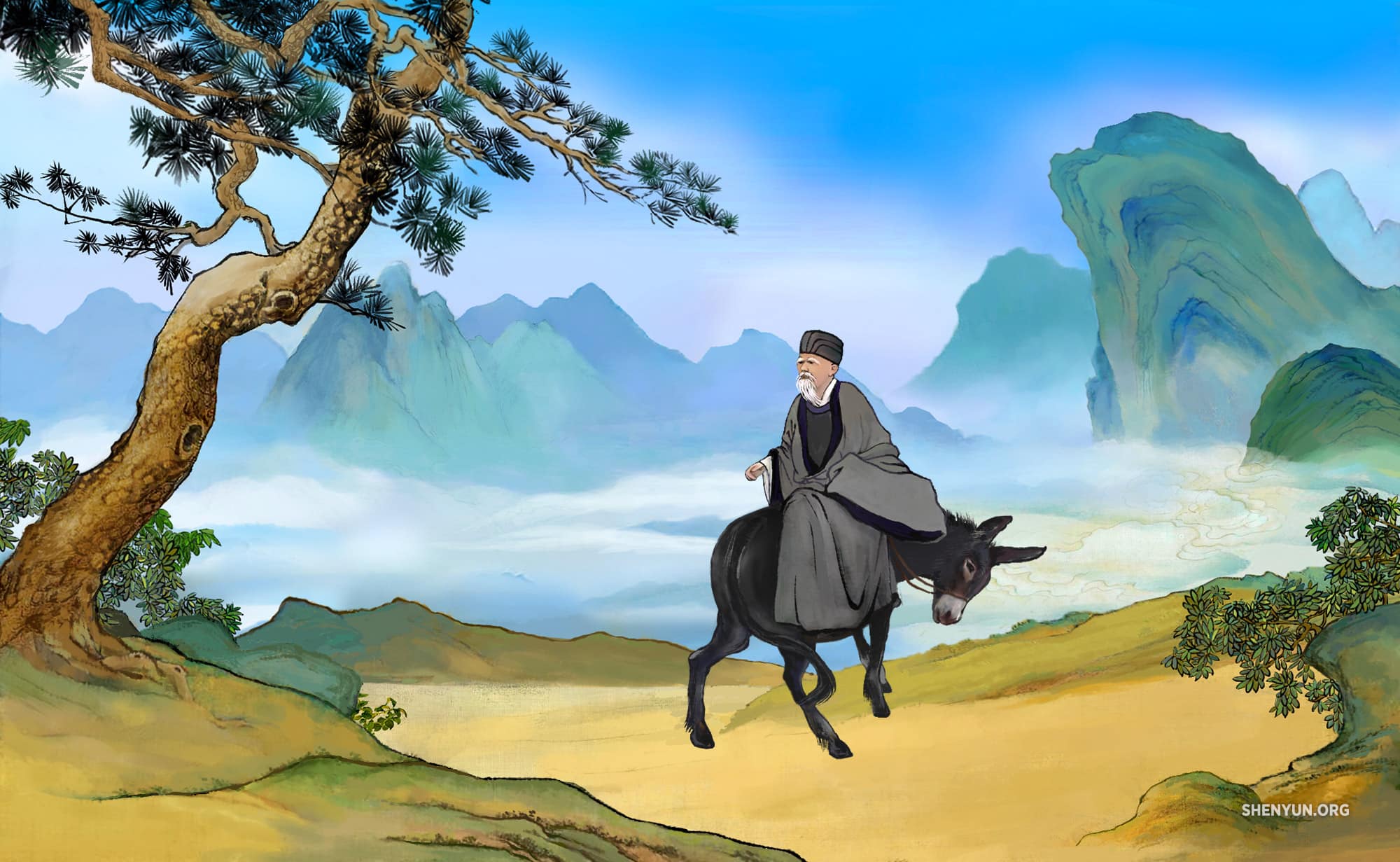
    Beneath mist-covered peaks, an old man moseys along a narrow path riding a donkey—but he sits backward, facing its tail. Villagers watch in bewilderment as he passes with his tattered clothes and soft, carefree laugh. This is Master Zhang Guolao, one of the Eight Immortals of Taoism—legendary figures said to have achieved enlightenment through their own unique ways.

    Of all Eight Immortals, Master Zhang became one of the most frequently depicted in Chinese art and literature. Through these and countless retellings, he emerges as an archetypal Taoist immortal: wise, whimsical, and unfettered by ordinary life.

    An Elusive Sage

    During the Tang Dynasty, around the seventh, or perhaps eighth century, word of a wise and cheerful Taoist recluse spread beyond the valleys he roamed. When news of his good deeds and miraculous powers reached the capital, multiple Tang emperors sought his counsel. Yet Master Zhang refused each imperial invitation, preferring solitude in the mountains.

    Even the formidable Empress Wu Zetian could not command him. Pressed to appear before her, the old immortal supposedly collapsed on the road and “died.” His body decayed within hours—until, not long after, travelers spotted him alive and well back in the mountains. For Master Zhang, death was just another illusion to shed at will.

    Years later, Emperor Tang Xuanzong begged him to visit the palace. This time, Master Zhang agreed and rode to the palace on his magical donkey, an animal said to travel a thousand miles in a day. When the immortal arrived at the capital, he magically transformed the donkey into a piece of paper, folded the creature up, and tucked it away.

    At the palace, the emperor found his guest both amusing and mystifying. When invited to drink, Master Zhang warned that he could handle little wine but had a “disciple” who could drink much more. He clapped his hands, and from the palace rafters descended a young man. The “disciple” drank cup after cup until, to everyone’s astonishment, he suddenly transformed into a golden goblet brimming with wine. Master Zhang chuckled, “My disciple has become what he drank.”

    After entertaining the royal court, the old immortal pulled out the small paper donkey from his satchel and, with a gentle puff of breath, the donkey sprang to life. Master Zhang then distracted the emperor and his courtiers, took his leave of the palace, and flew off on his donkey into the clouds, his laughter fading in the wind.

    Why backwards?

    In paintings and sculptures, Master Zhang is instantly recognizable—a jovial old man riding backward on his donkey. The image is playful, yet it carries profound meaning.

    Riding backward, Master Zhang turns away from the clamor of ambition and the pursuit of personal gain. He moves against the current of the mundane world, reminding us that the way to true freedom lies not in worldly pursuits, but in letting go—returning to simplicity, stillness, and one’s original purity.

    This classic story is retold in Shen Yun’s 2026 dance The Legend of Master Zhang Guolao.

    相关文章
    • 老子出关 Laozi Shenyun Thumb
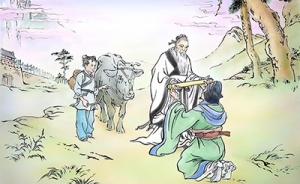
      Bestowing the Tao – the Story of Lao-Tzu
    • SYWEB 262 FPF #3 Laozi Socrates  V4 AB SM 650x325
      Famous Parallel Figures 2/10: Lao-Tzu and Socrates
    • Wudang Header
      The Sacred Taoist Wudang Mountains

    上一页

    A Love Story: The Village Boy and the Fairy
    相关文章
    • Bestowing the Tao – the Story of Lao-Tzu
      老子出关 Laozi Shenyun Thumb
    • Famous Parallel Figures 2/10: Lao-Tzu and Socrates
      SYWEB 262 FPF #3 Laozi Socrates  V4 AB SM 650x325
    • The Sacred Taoist Wudang Mountains
      Wudang Header
    Shen Yun logo golden

    神韵艺术团是全球顶级中国古典舞与传统音乐艺术团。神韵艺术团成立于纽约,通过中国古典舞、民族民间舞、舞剧、交响乐伴奏、乐器独奏和美声独唱,复兴与弘扬中国五千年正统神传文化。

    关于神韵
  • 20周年纪念
  • 走近神韵
  • 神韵交响乐团
  • 神韵的生活
  • 关于神韵的基本事实
  • 我们面临的挑战
  • 藝術與靈性的啟迪
  • 艺术家
  • 观赏礼仪
  • 视频
  • 最新
  • 关于我们
  • 艺术家
  • 观众反馈
  • 媒体报导
  • 新闻
  • 最新消息
  • 新闻
  • 博客
  • 媒体报导
  • 神韵百科
  • 神韵舞蹈
  • 神韵音乐
  • 神韵声乐
  • 神韵服饰
  • 神韵天幕
  • 神韵道具
  • 神韵舞剧
  • 神韵与中国传统文化
  • 与神韵互动:
    在乾净世界平台追踪我们的频道
    请留言以作纪念
    神韵作品
    神韵的线上影音平台
    艺术考级中心
    神韵艺术品
    神韵艺术家
    神韵艺术团官方网站 ©2026 神韵艺术团,版权所有。
    联系我们 使用条款 隐私政策 网站地图